The full side-by-side
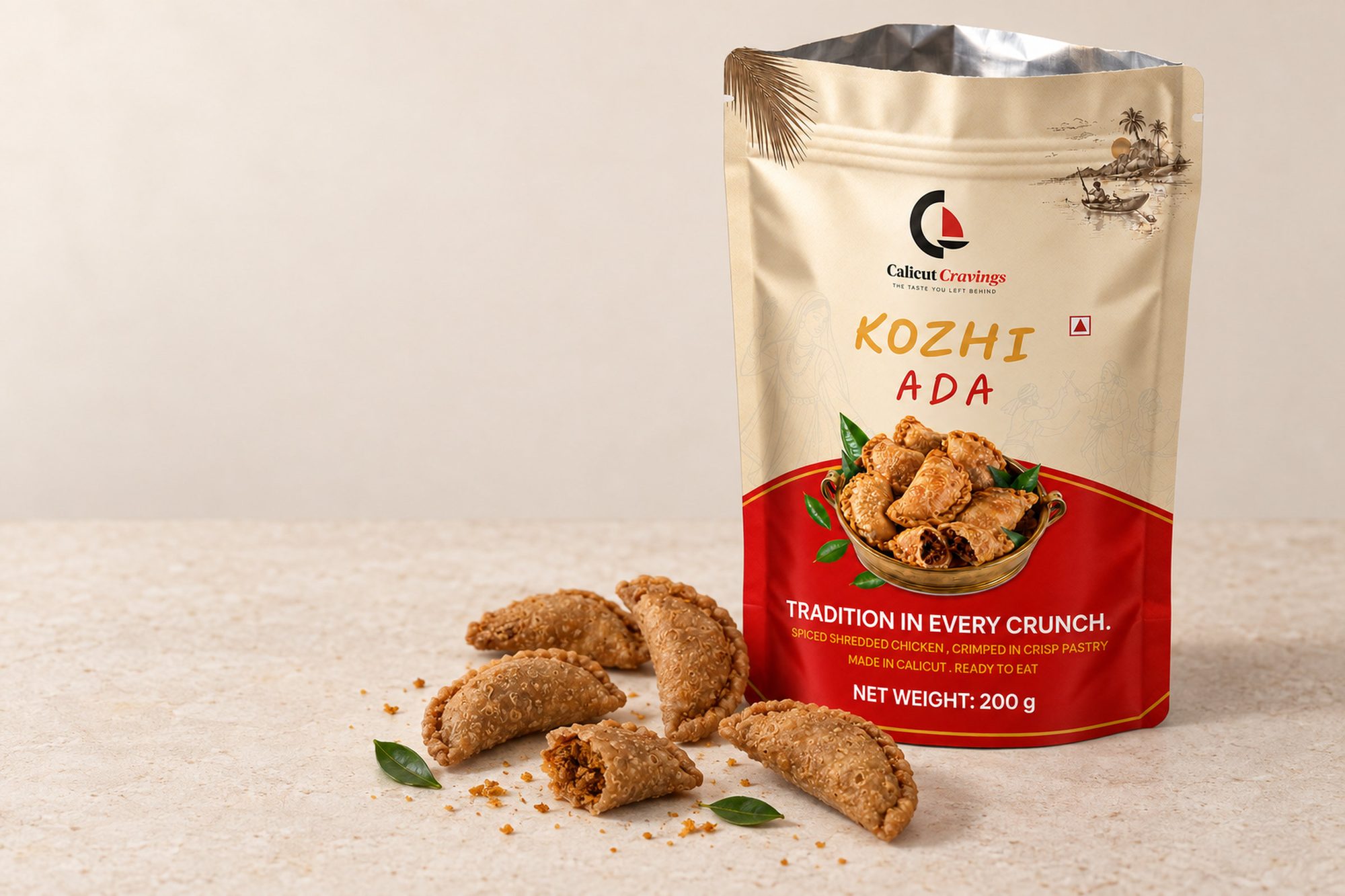
This table compares the steamed rice-flour kozhi ada, the older home style, with a samosa. Kozhikode bakeries also sell a fried wheat-pastry kozhi ada; on wrapper, method and texture that one sits much closer to the samosa column, and the filling is what tells them apart.
| Attribute | Kozhi Ada | Samosa |
|---|---|---|
| Region of origin | Malabar coast, north Kerala | Central Asia; now pan-Indian |
| Wrapper | Rice flour, soft, steamed | Wheat (maida), crisp, deep-fried |
| Filling | Spiced shredded chicken (fennel, ginger, garam masala, coriander, mint) | Spiced potato (most common); sometimes minced lamb |
| Cooking method | Steamed, then a brief pan-finish in coconut oil | Deep-fried |
| Texture | Soft outer, moist inside | Crisp outer, drier inside |
| Oil absorbed | Low - a film of coconut oil | High |
| Fat / flavour carrier | Coconut oil | Neutral frying oil |
| Served with | Strong sweet milky chaya | Mint–coriander chutney + tamarind |
| Eaten at | Malabar tea-time (4–6 pm), Ramadan iftar | Anytime snack, pan-India |
Why the confusion exists
Both are hand-held, both are roughly triangular or half-moon, and both are savoury. That’s enough for a marketplace listing to slap “chicken samosa” on a pack of Kozhi Ada so pan-Indian shoppers recognise it. Compared like for like, the steamed ada is soft and light where a samosa shatters. The fried bakery kozhi ada does share a samosa’s crispness - what still separates them is what is inside: fennel-led shredded chicken with ginger, curry leaf and garam masala, never spiced potato.
If you want the genuine article, read what Kozhi Ada actually is, make it from our recipe, or order the fried bakery style from our Calicut kitchen.
Keep reading & shopping
Frequently asked
Is Kozhi Ada the same as a chicken samosa?
No. A samosa is a deep-fried wheat-pastry (maida) parcel; Kozhi Ada is a steamed rice-flour pocket that's then briefly pan-finished in coconut oil. They come from different regions, use different wrappers, and are cooked completely differently. The only real similarity is a rough half-moon or triangular silhouette.Which is healthier, Kozhi Ada or samosa?
Kozhi Ada generally carries less oil, because it's steamed and then given only a light pan finish rather than deep-fried like a samosa. It's not a health food, but the cooking method means it absorbs far less oil than a deep-fried maida pastry.Why do some sellers call Kozhi Ada a 'chicken samosa'?
Purely for recognition - 'chicken samosa' is a phrase pan-Indian shoppers already know, so some marketplace listings use it as a shortcut. It's misleading: an authentic Kozhi Ada has a soft steamed rice-flour wrapper, not a crisp fried pastry.What does Kozhi Ada taste like compared to a samosa?
The filling of a Kozhi Ada is milder and more aromatic - fennel, ginger, garam masala and coriander over shredded chicken - against a soft, neutral rice wrapper. A meat samosa is spicier and drier, wrapped in a crisp, oil-rich pastry. Different textures, different flavour balance.