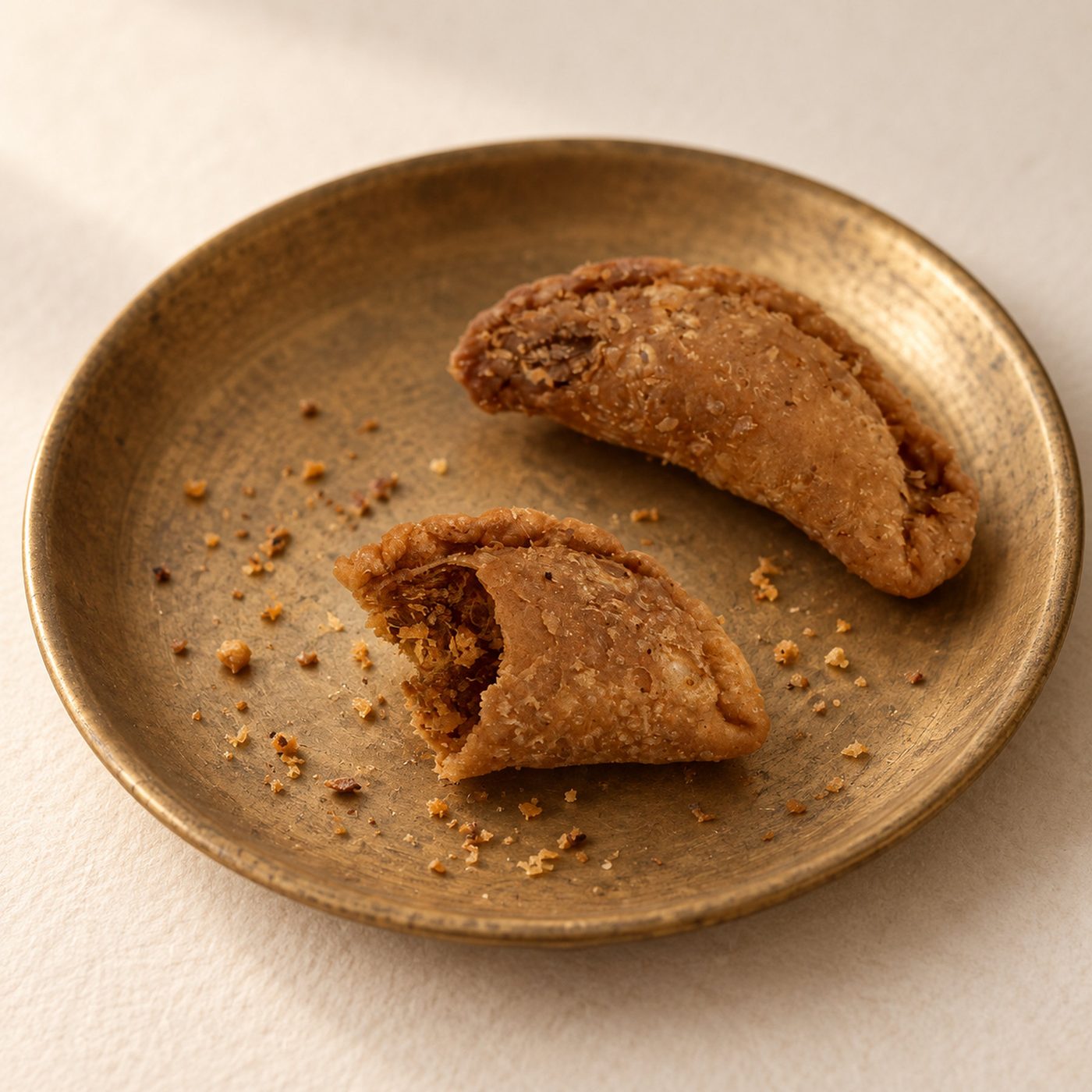
The short story
Origin
Kozhi Ada belongs to the Mappila Muslim culinary tradition of north Kerala - the food culture shaped by roughly twelve centuries of Arab maritime trade through the port of Calicut. Arab merchants brought dates, fennel, semolina and the technique of folded, sealed pastry; local cooks had rice flour, coconut and a sophisticated spice palate already in place. Kozhi Ada is one of the cleanest fusion outcomes: an Arab pastry construction filled with a south-Indian spice masala.
The word is plain Malayalam - kozhi means chicken; ada is a generic word for a folded or steamed preparation, used for both sweet and savoury items across Kerala. (The sweet ela ada is rice-flour dough wrapped around coconut-jaggery filling and steamed in a banana leaf - same word, different filling, different region.) The Malabar version, the savoury chicken one, is what people now mean when they say “Kozhi Ada” by itself.
What’s inside
A traditional Kozhi Ada has three components and not much more.
- The wrapper. Fine rice flour, scalded with boiling water and a touch of coconut oil, then kneaded warm into a soft, pliable dough. Wheat flour is sometimes substituted in modern bakeries - purists hold the line on rice flour. Rice flour gives the soft, almost dumpling-like texture; wheat gives a chewier, sturdier wrapper.
- The filling. Boneless chicken (thigh works best - it shreds clean and stays moist) cooked with onions, ginger-garlic, fennel seed, green chilli, Kashmiri chilli powder, turmeric, garam masala, fresh coriander and mint. Lime juice off the heat to brighten. The filling should be moist but not wet - wet filling bursts through the wrapper during cooking.
- The finish. A film of coconut oil on a flat tawa, ninety seconds per side, until the surface lightly blisters. This is what separates a bakery Kozhi Ada from a steamed home one - the toasted coconut-oil note that everyone in Calicut is unconsciously calibrating against.
How to serve
Hot. With strong sweet milky chaya, served in a small glass - never a mug. The combination of hot tea and the warm spiced filling is the cultural anchor; mint chutney and a wedge of lime are welcome modern additions but not traditional.
During Ramadan, Kozhi Ada is one of the cornerstone iftar items in Mappila households - it breaks the fast quickly and fills well. The steamed version re-steams from frozen in 8–10 minutes; the fried bakery version keeps sealed on the shelf right through the month, which is why it is the one that gets posted. It is the use case this pack was built for.
How it differs from a samosa
People often ask this. The table below compares the steamed home-style ada with a samosa: they share a triangle-ish silhouette and not much else. The fried bakery-style kozhi ada is closer to a samosa in method - what separates them there is the filling and the spicing, not the technique.
| Attribute | Kozhi Ada | Samosa |
|---|---|---|
| Region of origin | Malabar coast (north Kerala) | Originally Central Asia, now pan-Indian |
| Wrapper | Rice flour, soft, steamed | Wheat (maida), crisp, deep-fried |
| Filling style | Spiced shredded chicken with fennel + coconut notes | Spiced potato (most common) or minced lamb |
| Cooking method | Steam, then brief pan finish in coconut oil | Deep fry |
| Texture | Soft outer, moist inside | Crisp outer, drier inside |
| Oil load | Low (a film of coconut oil) | High |
| Served with | Strong sweet milky chaya | Mint–coriander chutney + tamarind |
Where to taste the real thing
In Calicut, every old bakery has its own version. Outside Kerala, your best bet is to order from a kitchen that actually makes them daily. We cook ours in our Calicut kitchen - the crisp fried bakery style, the version that survives a courier - order here
- or follow the recipe and make a batch at home. Curious what else the region cooks? Browse the full Malabar snacks names list.
Sources
Keep reading & shopping
Frequently asked
What does Kozhi Ada mean?
In Malayalam, kozhi means chicken and ada is a generic word for a steamed or folded preparation - most commonly a sweet rice-leaf parcel. Kozhi Ada is the savoury north-Kerala cousin: a pocket of spiced shredded chicken - steamed rice flour at home, fried wheat pastry at the bakery counter.Where is Kozhi Ada from?
From the Malabar coast of north Kerala - historically associated with Calicut (Kozhikode) and the Mappila Muslim culinary tradition that shaped much of Malabar's snack culture.What does Kozhi Ada taste like?
Mildly spiced - the chicken filling carries garam masala, fennel, ginger, green chilli and coriander, balanced against a plain wrapper - soft rice flour in the steamed kind, crisp pastry in the fried. It is closer in flavour to a spiced kheema than to a samosa, and far less oily.How is Kozhi Ada served?
With chaya (Kerala tea) - the classic chaya-kadi pairing. The home kind is eaten hot from the steamer; the fried bakery kind is eaten as it is. A squeeze of lime is welcome but not traditional.Is Kozhi Ada the same as a samosa?
Not the same thing, though they overlap. The older home-style kozhi ada is a steamed rice-flour pocket - a different wrapper, texture and region from a samosa. Malabar bakeries also sell a fried wheat-pastry kozhi ada, which shares a samosa's method but not its filling: fennel-led shredded chicken rather than spiced potato. See our comparison post for the full table.