What to look for
Five signals separate a real Malabar snack supplier from a mass-market reseller. None of them require expert knowledge - just five minutes on the brand’s website before you order.
1. Made in Kerala, not “inspired by”
Look for an actual kitchen address. Not “office in Mumbai, manufactured pan-India.” A genuine Malabar snack brand cooks in Kerala - usually in Kozhikode, Malappuram, Kasaragod or Thrissur - and says so on the About or Contact page. The FSSAI licence number (mandatory on every food package sold in India) tells you the registered kitchen state.
2. Short ingredient lists
For fresh-style items like Kozhi Ada or Unnakaya, the ingredient list should be five to ten short, recognisable items. Long lists with maltodextrin, sodium benzoate, INS-211, calcium propionate are the chemistry of a six-month shelf life - fine for shelf-stable industrial snacks, fundamentally wrong for fresh Malabar food.
3. Honest shelf life
A useful heuristic: if a snack with chicken, fresh herbs, and oil claims to keep at room temperature for six months, something has been added that isn’t on the original recipe. Frozen Kozhi Ada keeps about 30 days in good packaging; refrigerated, 3–4 days. Bakes like Maamoul keep longer at room temperature (the high sugar and date paste protect them) - but still not six months without preservatives.
4. Verifiable halal / FSSAI badges
The FSSAI licence is a 14-digit number - verify it at the official FSSAI search portal. Halal certificates are issued by named bodies (Jamiat Ulama-e-Hind Halal Trust, Halal India Pvt Ltd, Halal Certification Services and a few others). A “halal” claim without a certifier name is worth pressing on.
5. Reviews on the brand’s own site, with names and photos
Marketplace stars are easy to game. Reviews on the brand’s own product page, with the reviewer’s city and (often) a customer photo, are much harder to fake. If a small Kerala brand has 50+ such reviews going back two years, you’re looking at a real operation.
The snack categories worth knowing
This is not a ranked “we are #1” list. It is a snack-by-snack guide to what’s worth ordering online in this category, based on what the dish actually is and how well it survives shipping. Brand names are listed neutrally further down.
Kozhi Ada - the category hero
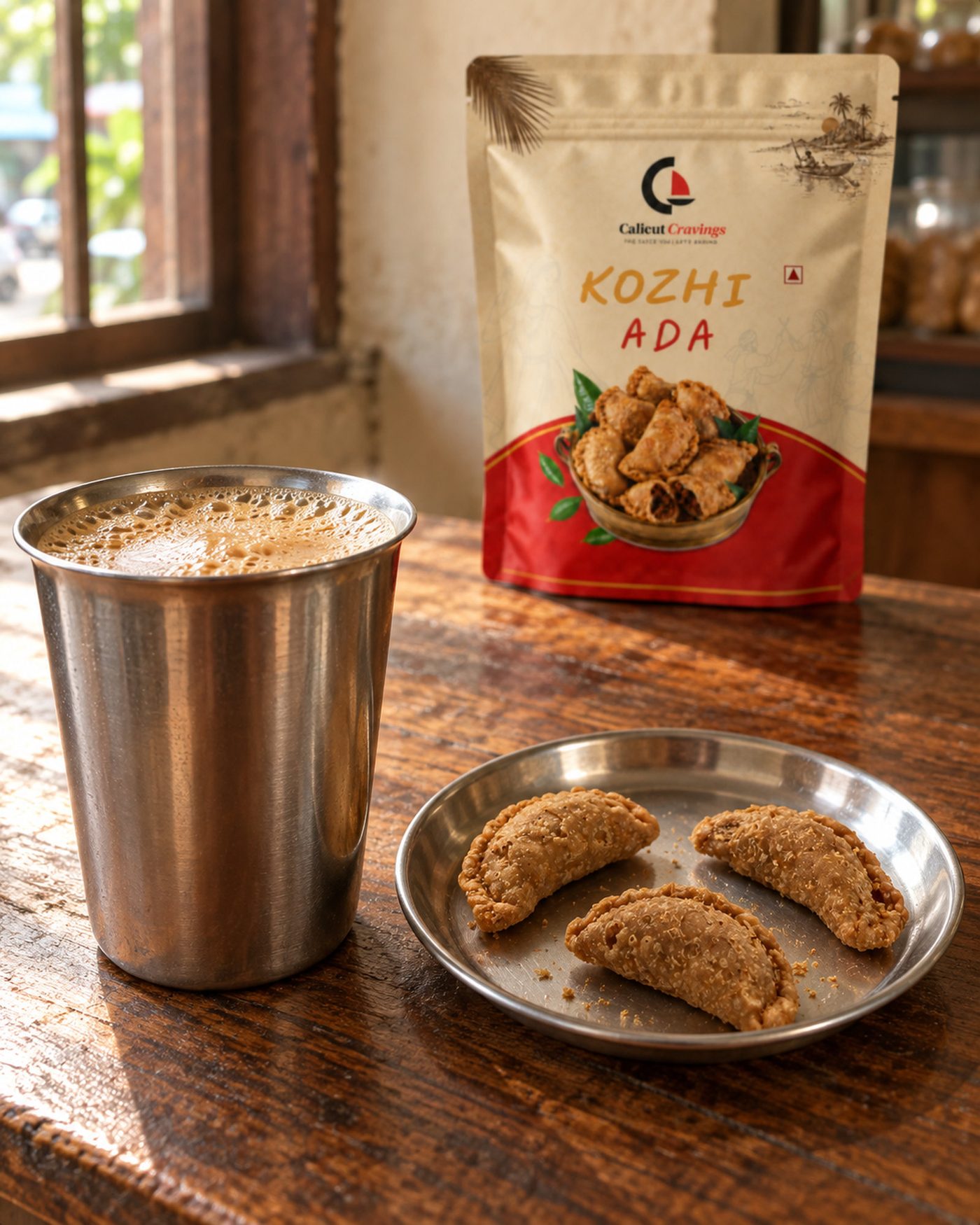
The signature Malabar snack. The hardest item to find done well outside Kerala, and the one most diaspora customers report missing most. Two versions ship under the same name and they are not interchangeable. The steamed rice-flour version - a soft wrapper, blistered on a tawa - is the older home style; it is a same-day food, so anyone posting it to you is sending it frozen with a cold chain. The fried wheat-pastry version is what Kozhikode bakery counters sell most of: crisp, crimped, and shelf-stable for months, which is why it is the one that survives a courier. Decide which you want before you order, and check the product page says so plainly.
Maamoul - best for gifting
Date-filled cookies with an Arab-trade heritage that survived in Mappila bakeries. Keep 30+ days at room temperature, photograph well in a box, pair with the Ramadan / Eid / Christmas calendar. Kerala-made Maamoul is genuinely rare; most options on marketplaces are Middle-Eastern imports (Halwani, Alkaramah, Nabil).
Unnakaya - banana sweet
Ripe Nendran banana mashed with coconut and jaggery, wrapped in a thin batter, deep-fried and dusted with semolina. Ramadan iftar staple. Best eaten fresh; travels poorly.
Pazham Pori - fritter
The everyday tea-time fritter - ripe Nendran banana sliced lengthwise, dipped in a turmeric-tinted batter, deep-fried in coconut oil. Best eaten within the hour, which is why few brands ship it well. The honest sellers either par-fry and freeze, or ship the batter and banana separately.
Gift hampers - for festivals
The busiest gifting category around Onam, Ramadan and Eid. A good hamper combines one fresh savoury, one sweet bake, a tin of Kerala chaya, and a handwritten note. The dishonest ones photograph six items and ship four; check the SKU list on the product page before ordering.
Browse gift boxes → · Gift box guide →
Where marketplaces fall short
Amazon and Flipkart listings can’t tell you who cooked your snack, when, or in what oil. The seller is often a middleman who never sees the food. Reviews are partly useful but mostly unverifiable. Returns on perishable food are functionally impossible.
This is structural, not a complaint. Marketplaces are great for shelf-stable, industrial products. They are wrong for fresh, regional, hand-made food. Direct from a Kerala kitchen is the only honest answer for this category.
The brands shipping authentic Malabar food today
Listed alphabetically. We’ve ordered from each at least once to verify they ship; we’re not ranking them, because head-to-head comparison of fresh food shipped to different addresses on different days is something you can only do for yourself.
| Brand | Based in | Notable for | Schema / blog |
|---|---|---|---|
| Abida Rasheed | Kerala | Kozhi Ada, masalas, condiments; FAQ + halal claim on product page | No structured data |
| Aira Foods (Flipkart) | Kerala | Kozhi Ada via marketplace listing | Marketplace |
| Calicut Cravings (this site) | Calicut (Kozhikode) | Kozhi Ada, Maamoul, gift hampers, recipe + guide content | Full JSON-LD + cluster content |
| Flavours of Calicut | Calicut | Banana chips, halwa, gift hampers; “#1 Kerala Snack Brand” positioning | No structured data |
| Gofudy | India | Kozhi Ada among broader Indian D2C catalogue | Light |
| Kaipunnyam | Kerala | Homemade Kerala foods; free shipping over ₹700 | No structured data |
| Kandra Foods | Kerala | Broad Kerala snacks; pan-India + worldwide ship | Light |
| Lulu Hypermarket | Kerala / UAE | Bakery shelf items | Retailer site |
| NatureLoc | Kerala | Banana chips, jackfruit chips, murukku | Light |
| Thalika | Kerala | Authentic snacks, no preservatives | No blog or schema |
| Worth2Deal (Amazon) | Kerala | Kozhi Ada via marketplace listing | Marketplace |
Use the five-signal checklist above on any brand on this list before placing your first order - that’s the real filter, not where someone sits in a list.
A note on this site
Calicut Cravings (the site you’re reading this on) is one of the brands in the list above. We included ourselves rather than hiding the conflict of interest, but did not rank ourselves ahead of anyone else - that’s not how an honest buying guide works. If you want to know what makes our kitchen distinctive, the About page is the right place to start; if you want to skip to the food, start with the Kozhi Ada.
The principle behind this guide: choose the snack you want, then evaluate the brand that best matches the five-signal checklist for that snack. If that’s us, great. If not, that’s also fine - the category needs more good kitchens, not fewer.
Keep reading & shopping
Frequently asked
What makes a Malabar snack authentic?
Three signals: (1) the recipe is from north Kerala, not 'inspired by'; (2) it's cooked in small batches, ideally in Kerala; (3) the ingredient list is short - real spice, real coconut, no preservatives beyond what's needed for shipping.Are these snacks halal?
Most kitchens serving the Malabar Muslim tradition are halal-certified - but practices vary. Always check the brand's certification page or the pack itself before ordering meat-based items.How long do Malabar snacks last when shipped?
Shelf life varies by snack and packing method. Same-day items steamed in rice flour need a freezer and a cold chain; the fried bakery-style versions of the same snacks, and bakes like Maamoul, keep for months at room temperature. Always check the brand's product page for the tested shelf life of the specific item, and which version you are buying.Which Malabar snack is best to start with?
Kozhi Ada - the spiced chicken pocket. It's the category's hero, accessible to people who've never had Kerala food, and very hard to find done well outside Kerala.