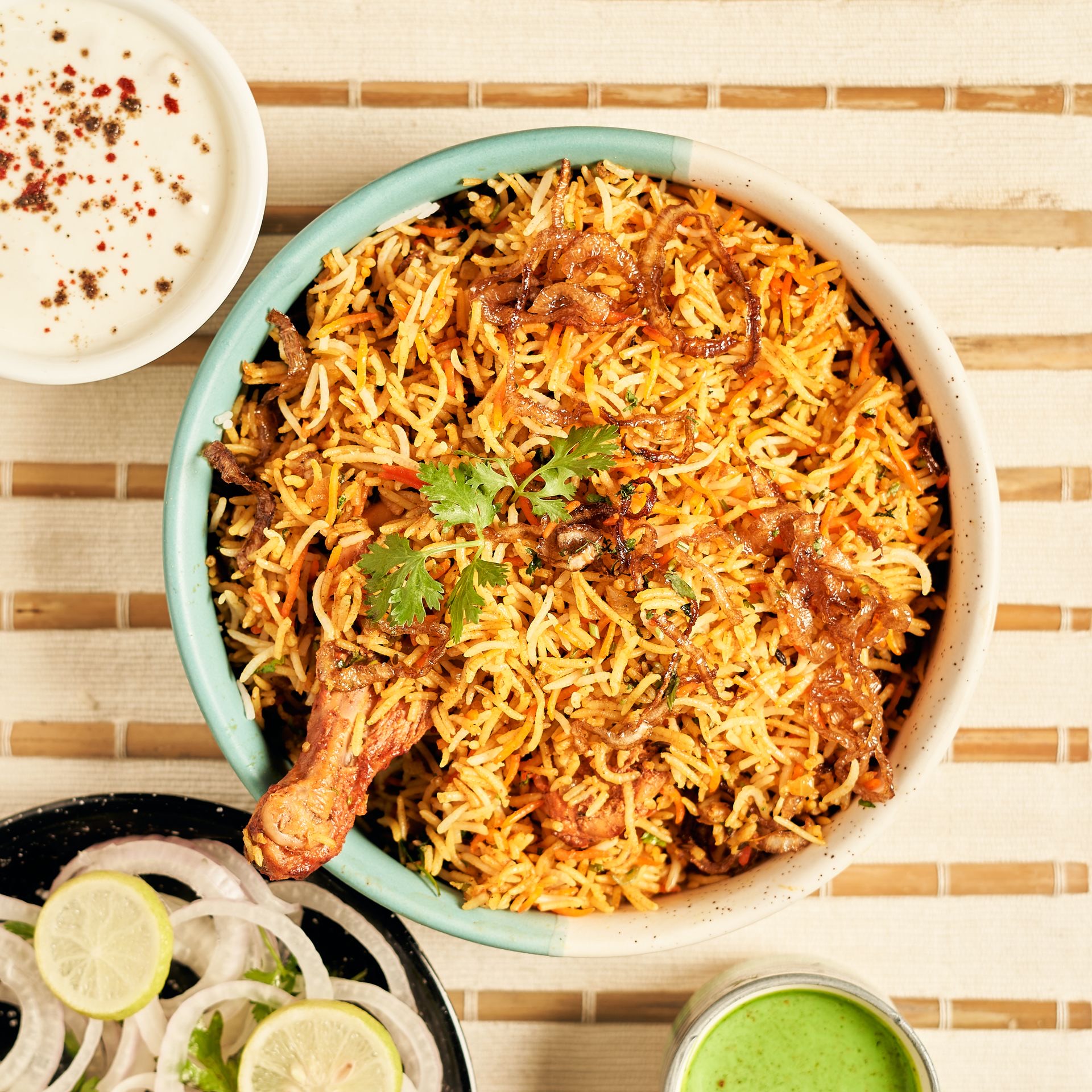
The rice is the whole point
If you take one thing from this recipe: use Jeerakasala (Kaima) rice and don’t soak it. The short, fine, aromatic grain is what makes a Thalassery biryani taste like a Thalassery biryani - substitute basmati and you’ve made a different dish. Read more about Malabar biryani and Mappila cuisine in our glossary.
Keep reading & shopping
Frequently asked
What rice is used for Malabar biryani?
Jeerakasala rice (also called Kaima) - a short-grain, fragrant Kerala rice, not long-grain basmati. It needs no soaking and gives Thalassery biryani its signature soft, non-sticky texture.How is Malabar biryani different from Hyderabadi biryani?
Malabar (Thalassery) biryani uses short-grain Jeerakasala rice rather than basmati, the rice and masala are cooked separately then layered and dum-finished, and the spicing is milder and more aromatic - reflecting the Malabar palate and Arab-trade heritage. It's garnished generously with fried onions, cashews and raisins.Do I need to soak Jeerakasala rice?
No. Unlike basmati, Jeerakasala needs no soaking and no long draining - just a gentle rinse. This is part of what makes the texture distinct.What are the quantities for Thalassery chicken biryani for 4 people?
Exactly this recipe: 2 cups (about 400 g) Jeerakasala rice, 750 g chicken, 3 large onions, 4 cups water, 4 tbsp ghee plus 2 tbsp coconut oil. For 8 people double everything; for 12 triple it but keep the dum time the same 15-20 minutes and use a wider pot rather than a deeper one.What goes into the Thalassery biryani masala?
Onions fried golden, ginger-garlic paste, green chillies, tomatoes and yoghurt, seasoned with turmeric, Kashmiri chilli, garam masala and the whole spices (cardamom, cloves, cinnamon, bay, star anise), finished with mint, coriander and lime. It is deliberately milder and more aromatic than Hyderabadi masala - fragrance over fire.Can I make it with mutton or fish instead of chicken?
Yes - Thalassery biryani is made with chicken, mutton, fish and prawns. Adjust cooking time for the protein (mutton needs longer; fish and prawns much less).