The city that named a fabric
For most of the second millennium, Calicut was the most important port on the western coast of India. The Moroccan traveller Ibn Battuta visited around 1342 and recorded it as one of the greatest ports of the world - describing ships from China, Sumatra, the Maldives, Yemen and Persia anchored together in its harbour. Six centuries before container shipping, this was where the Indian Ocean’s trade networks intersected.
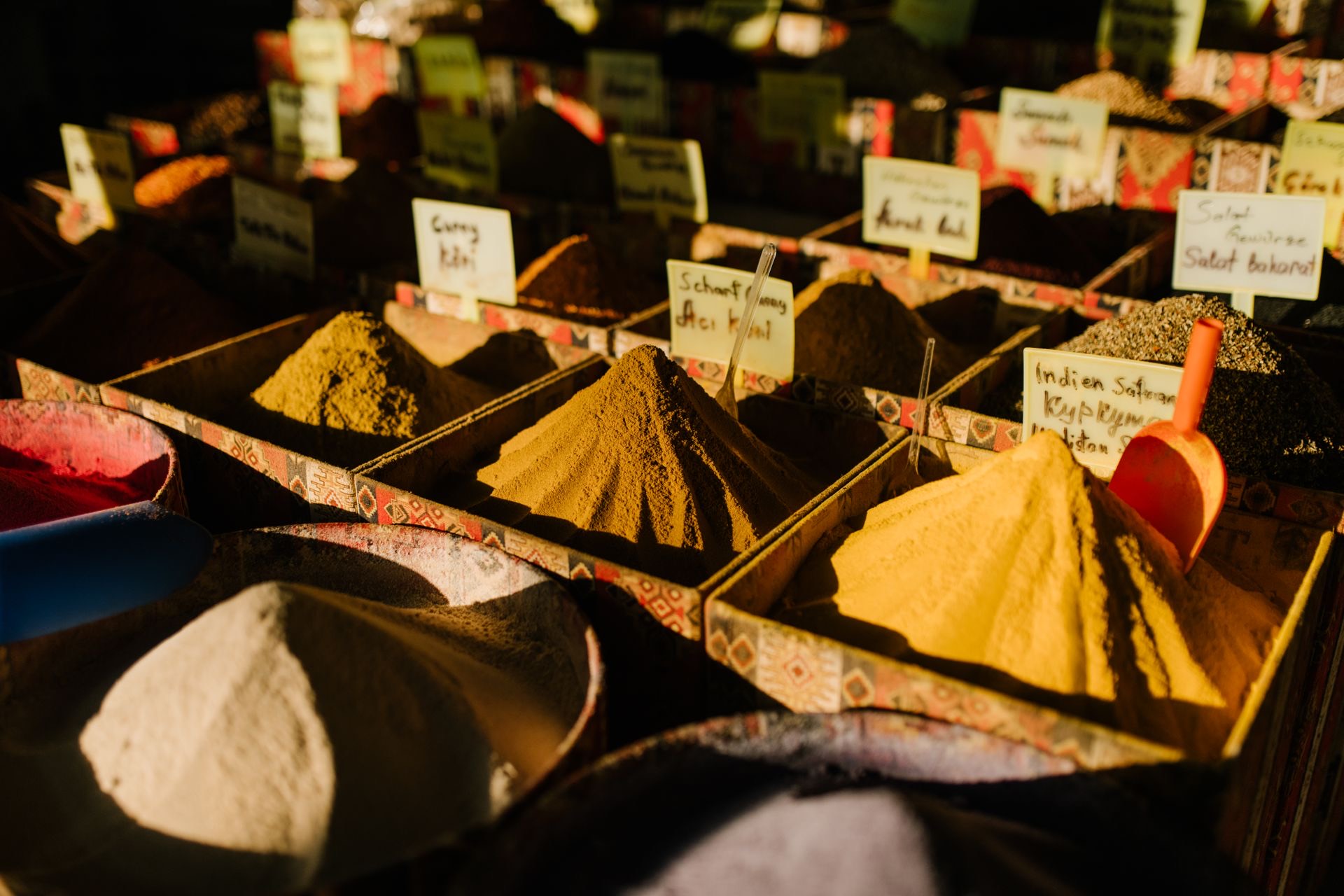
The city’s wealth was built on three things: black pepper, which only grew well in the Malabar climate; cardamom and ginger from the Western Ghats just inland; and cotton cloth woven in the hinterland and finished in the port for export. The cotton was plain, unbleached, and durable. European merchants who bought it called it after the city they bought it from - calico. By the 17th century the word had entered English permanently, and “calico printing” became its own industry in Lancashire and Massachusetts, but the cloth’s name kept Calicut on every European shop sign and trade ledger for two hundred years.
Vasco da Gama’s arrival on 20 May 1498 is the moment the city enters the European school textbook. He came looking for a sea route to the spices - the long overland route through the Ottoman Empire had become commercially impossible - and Calicut was the first Indian harbour he reached. The Portuguese, the Dutch and eventually the British each built their own factories on the Malabar coast over the next four hundred years. But long before any of them, the city was already a node in the Indian Ocean economy, governed by the Zamorin (Samoothiri), the hereditary king who policed the harbour, regulated the trade, and protected the Arab merchant communities who had been settling here since the 8th century.
The food that came home
Trade reshapes food. Every culture that came through Calicut left an ingredient or a technique behind in the local kitchen.
- Arab traders brought dates, fennel, semolina, ghee, and the bread-baking technique that became the foundation of Malabar’s bakes - Maamoul most directly, but also Chatti Pathiri’s layered rice-and-meat construction.
- Persian sailors brought saffron and the slow-cooked rice traditions that eventually merged with local cooking to become Malabar biryani.
- The Portuguese, arriving in 1498, introduced the chilli, the cashew, the pineapple, the potato and the tomato - all originally from the Americas, all now indispensable to Kerala cooking.
- The Chinese left behind the fishing-net design still working at Fort Kochi, and the technique of frying in deep, neutral oil.
What the Mappila Muslim community of Calicut did with these imports - over roughly twelve generations - is the Malabar snack culture the rest of India is now waking up to. Kozhi Ada, Unnakaya, Chatti Pathiri, Mutta Surka: every one is a fusion artefact from the spice route. None of them exists in this form anywhere else.
Modern Kozhikode
Calicut is officially Kozhikode today - the colonial-era name persists in international usage (and in the airport’s IATA code, CCJ). It is a city of about two million people, still on the coast, still organised around its old harbour and its older neighbourhoods. The Mappila kitchen tradition is still very much alive: at any roadside bakery between 4 and 6 pm you’ll find Kozhi Ada, Pazham Pori, Unnakaya and a half-dozen things you won’t find a hundred kilometres inland.
What changed is that the people who grew up eating this food now live in Bangalore, in Dubai, in Toronto, in London. The food itself has been slow to travel. Industrial-scale snacks ship fine; fresh Malabar snacks - rice-flour, coconut, spice, made by hand the day they’re packed - do not.
That gap is the brief.
Why we built this brand
There is no factory version of Kozhi Ada that tastes like the bakery version. The food is too labour-intensive, too perishable, too rooted in a specific technique. The only way to ship it right is to cook it daily and refrigerate or freeze for transit.
Calicut Cravings exists to do exactly that. We cook the food we’d eat ourselves, in the city the food is from, and ship across India to the people who already know what it tastes like - and to anyone else who wants to find out.
Shop Malabar Snacks · Read the pillar guide · Start with Kozhi Ada
Keep reading & shopping
Frequently asked
Why is Calicut called Calicut?
Because of calico - the unbleached cotton cloth Europeans traded out of the city in the 15th and 16th centuries. The word 'calico' is the English form of 'Calicut,' the name Portuguese and British traders used for what locals call Kozhikode.Is Calicut and Kozhikode the same city?
Yes. Calicut is the colonial-era name still used internationally; Kozhikode is the official Malayalam name used in Kerala today.What is Calicut famous for, food-wise?
Malabar cuisine - the spice-and-coconut food of north Kerala, shaped by centuries of Arab trade. Kozhi Ada, biryani, halwa, banana sweets and the chaya-kadi tea-snack culture all anchor here.Who founded Calicut Cravings?
We're a small, founder-led Malabar kitchen from Calicut. The full founder story lives on our About page.