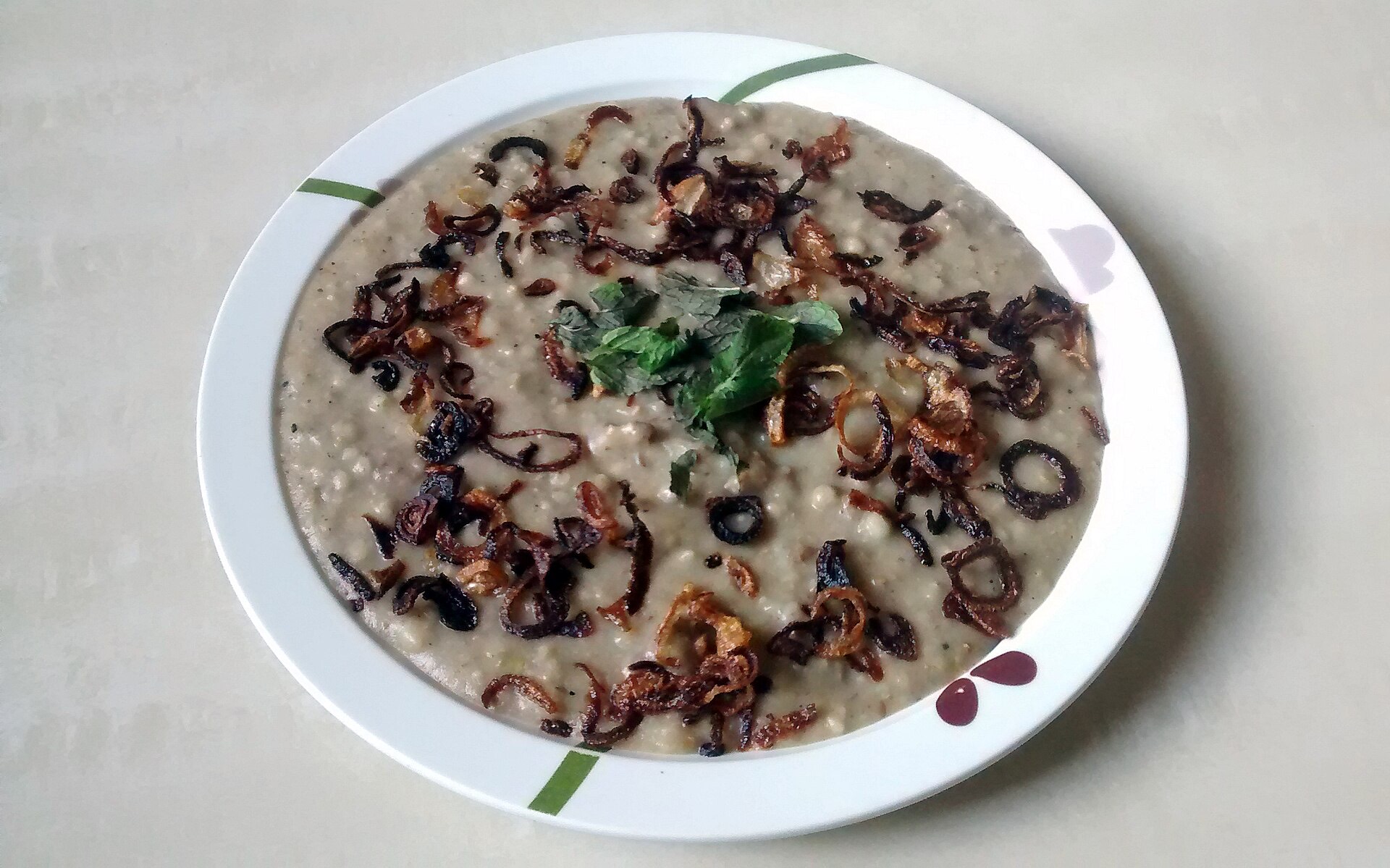
A dish from the trade routes
Aleesa is one of the clearest examples of how Arab trade shaped Mappila cuisine: it’s the Malabar descendant of Harees, adapted with coconut milk and the local touch of sugar on the side. The pounding step is essential - it’s what turns wheat and chicken into the smooth, comforting porridge that defines the dish. Read more in the story of Calicut.
Keep reading & shopping
Frequently asked
What is Aleesa?
Aleesa - also called Alsa or Hareesa - is a Malabar dish of broken wheat and chicken (or mutton) cooked in coconut milk and pounded into a smooth, rich porridge, finished with fried shallots, cashews, raisins and ghee. It's an Arab-origin dish (related to Middle Eastern Harees) that became a Mappila favourite, served at Ramadan iftar and weddings.Why is Aleesa served with sugar?
Traditionally a small bowl of sugar is served on the side to sprinkle over the savoury porridge - the sweet-savoury contrast is the customary way to eat it at Moplah weddings and iftar. It's optional but classic.What's the difference between Aleesa and Haleem?
They're close cousins. Aleesa (Malabar) is simpler - wheat and one meat in coconut milk, pounded smooth. Haleem (Hyderabadi and others) typically uses a mix of lentils and meat with more spices. Both descend from the Arab Harees.Can I make Aleesa with mutton?
Yes - mutton is traditional and gives a richer result; it just needs longer cooking to become tender enough to pound smooth.