How we calculated it (so you can check)
There is no certified lab analysis published for kozhi ada anywhere, so any calorie figure you see online is an estimate. Here is ours, from the ingredient weights in our own kozhi ada recipe:
| Component | Typical weight | Approx. energy |
|---|---|---|
| Rice-flour dough | ~30 g | ~105 kcal |
| Spiced chicken filling (chicken, onion, spices) | ~25 g | ~45-55 kcal |
| Coconut oil (tawa finish) | ~2-3 g | ~18-27 kcal |
| One medium steamed kozhi ada | ~60 g | ~160-190 kcal |
Energy values for rice flour, cooked chicken and coconut oil are standard nutrition-table figures. Piece size is the biggest variable: a large wedding-tray ada can be half again the weight, and the numbers scale with it.
Why the fried version is different
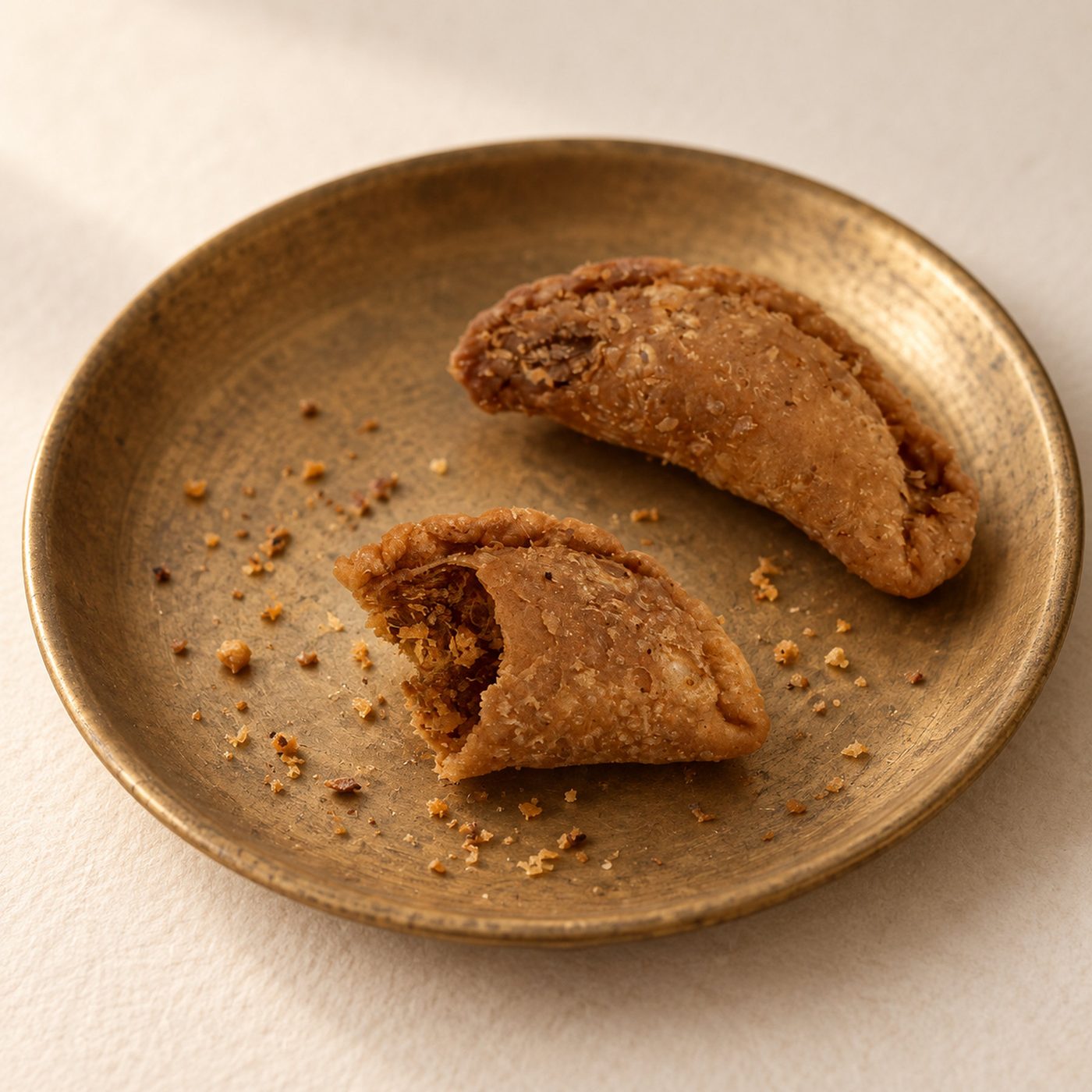
The fried kozhi ada is a wheat-pastry shell around the same chicken filling - the version most Kozhikode bakery counters sell, and the only one that keeps long enough to post. Frying replaces the steamed rice dough with an oil-absorbing pastry shell, which lifts a similar-sized piece to roughly 230-280 kcal on the same estimate method. Choosing purely for lightness, the steamed one is lighter; choosing for a snack that keeps three months without a freezer, the fried one is the practical answer. Our own packs are the fried bakery style. The full comparison is in Kozhi Ada vs samosa.
Where the protein comes from
The filling is shredded chicken sauteed with onion, ginger, fennel and green chilli - real meat, not a token smear. At ~25 g of cooked chicken per piece, that is roughly 6-8 g of protein, which is why two kozhi ada with chaya hold you until dinner in a way plain fried snacks do not.
The honest caveats
- These are kitchen estimates, not certified values. Our packaged Kozhi Ada carries a printed nutrition panel; we are re-verifying those laboratory figures before republishing them here, and this page will carry the confirmed per-100 g values once they are settled.
- Home and shop recipes vary: more oil on the tawa, richer fillings and bigger pieces all move the number up.
- Steaming is the older Malabar method and frying is the bakery-counter one; both are genuine kozhi ada. Wherever you buy, ask which you are getting - the answer roughly halves or doubles the oil in the snack, and decides whether it needs a freezer.
New to the dish? Start with What is Kozhi Ada? or the glossary entry, and see the Malabar snacks guide for the whole family.
Keep reading & shopping
Frequently asked
How many calories does one kozhi ada have?
A steamed, medium-sized kozhi ada works out to roughly 160-190 kcal by our kitchen estimate: about 30 g of rice-flour dough, 25 g of spiced chicken filling and a small coconut-oil tawa finish. Deep-fried pastry versions are higher, roughly 230-280 kcal per piece.Is kozhi ada healthy?
The steamed version is one of the lighter Malabar tea snacks: it is steamed rather than deep-fried, and the chicken filling adds real protein (roughly 6-8 g per piece). Like any snack it is portion-dependent - two pieces with chaya is a reasonable tea, six is a meal.Does kozhi ada have more calories than a samosa?
Usually fewer. A samosa is deep-fried maida pastry around a potato filling, which pushes its energy density higher than a steamed rice-flour pocket of similar size. The fried, pastry-style kozhi ada narrows that gap.How much protein is in a kozhi ada?
The shredded-chicken filling contributes roughly 6-8 g of protein per medium piece by our estimate - noticeably more than potato-filled or plain-carb tea snacks.Are these lab-tested numbers?
No - they are transparent kitchen estimates computed from the ingredient weights in our own recipe, using standard nutrition values for rice flour, chicken and coconut oil. We show the working so you can check it. Our packaged Kozhi Ada carries a printed laboratory panel; we are re-verifying those figures before publishing them on this page.