Be honest with yourself about the stirring
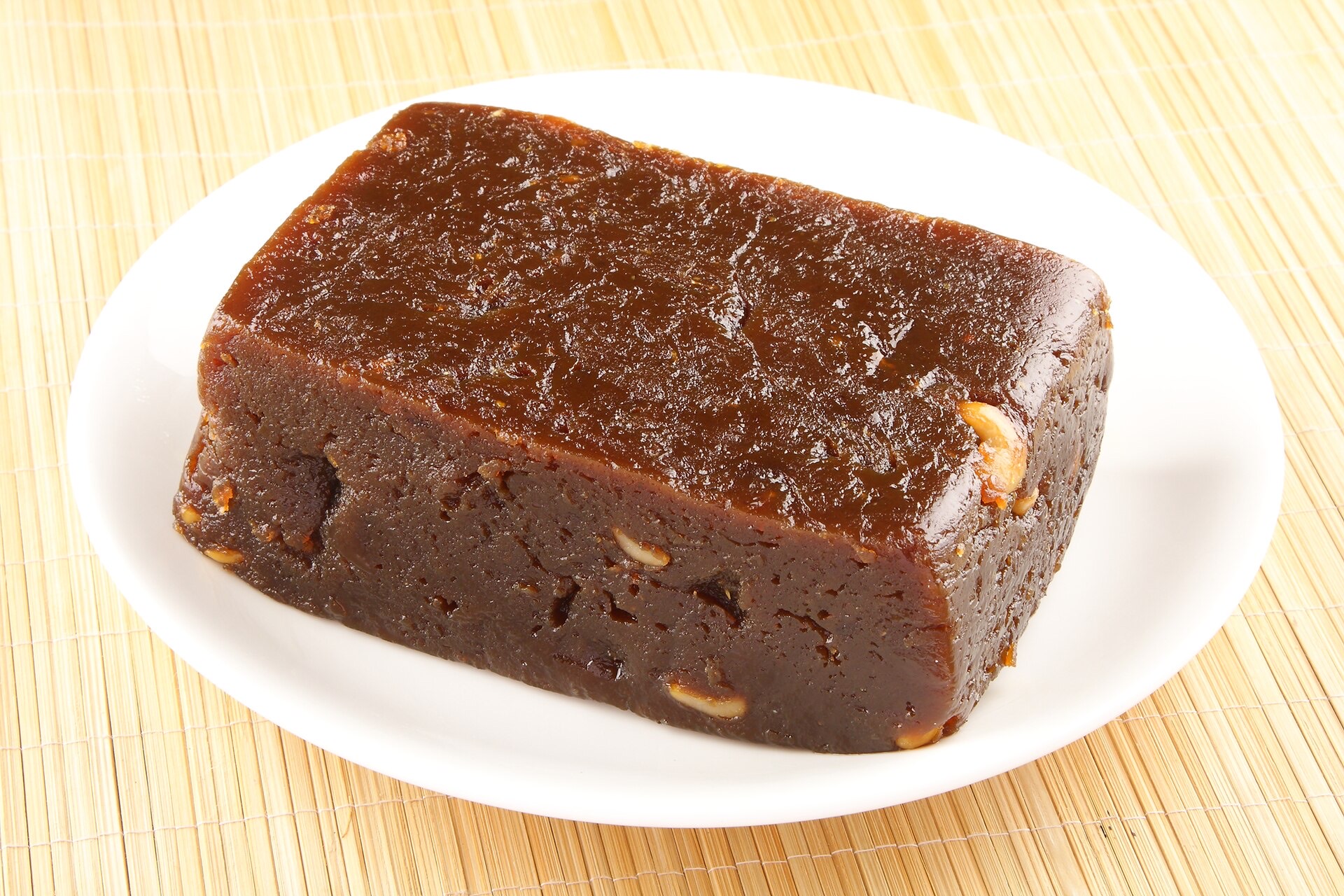
This is not a fast recipe. The reward - that unmistakable glossy, chewy Calicut texture - comes from cooking the starch slurry down slowly with constant stirring, adding coconut oil as you go, for the better part of an hour. Commercial halwa makers on Mittai Theruvu (Sweet Meat Street) do this in enormous pans over wood fires; the home version is smaller but no less demanding.
If you want the taste without the arm workout, our gift boxes include Calicut sweets. Read more about Kozhikodan halwa and why coconut oil matters in our glossary.
Keep reading & shopping
Frequently asked
What makes Kozhikodan halwa different from other halwa?
Two things: it's made from wheat starch (extracted from rested maida slurry), and it's cooked in coconut oil rather than the ghee used in Tamil Nadu's Tirunelveli halwa. The coconut oil gives Calicut halwa its distinct flavour.Why do you rest the flour-and-water mixture?
Resting lets the wheat starch separate and settle so you can drain off the excess water. The concentrated starch slurry is what cooks down into the chewy, glossy halwa. Commercial makers ferment it longer; a few hours works for a home batch.Can I use jaggery instead of sugar?
Yes - jaggery gives the prized dark 'black halwa' with a deeper, caramelised flavour. Strain the melted jaggery first to remove any grit.Why isn't my halwa setting?
It was likely undercooked. The halwa must be cooked until it leaves the sides of the pan as a glossy mass and a spoon drawn through the centre leaves a clean line - that's the doneness signal. Until then it stays soft and won't set.