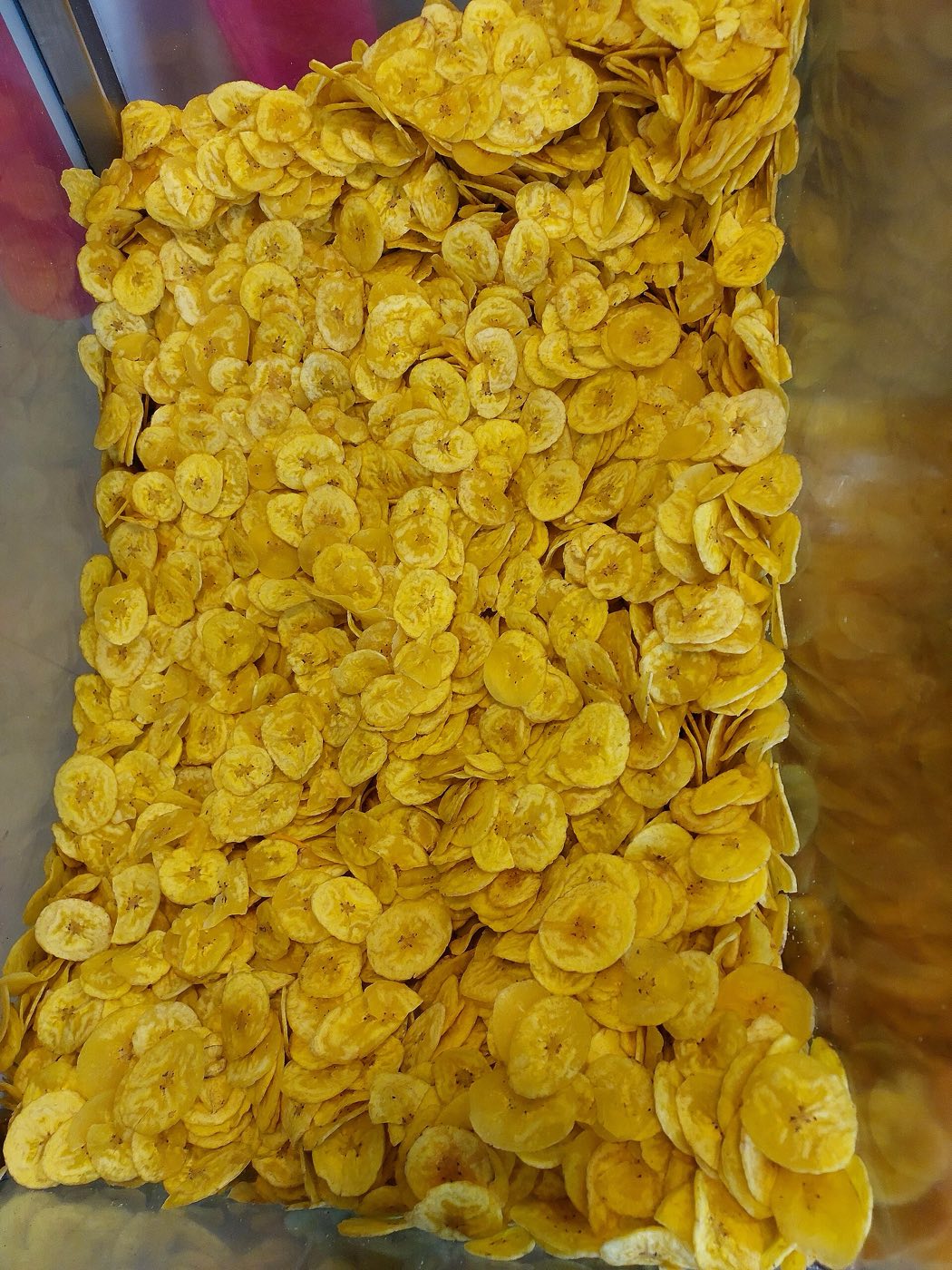
The numbers, honestly presented
The standard reference for banana chips is the USDA entry (Snacks, banana chips), per 100 g:
| Nutrient | Per 100 g | Per 30 g portion |
|---|---|---|
| Energy | 519 kcal | ~155 kcal |
| Fat | 33.6 g | ~10 g |
| - of which saturated | 29 g | ~8.7 g |
| Carbohydrate | 58.4 g | ~17.5 g |
| - of which sugars | 35.3 g* | ~10.6 g* |
| Fibre | 7.7 g | ~2.3 g |
| Protein | 2.3 g | ~0.7 g |
*The sugar figure is the important asterisk. The USDA entry reflects typical commercial banana chips, many of which are sweetened (sugar-coated or honey-dipped dehydrated chips). Kerala salted upperi - raw nendran plantain fried in coconut oil with salt and turmeric - has no added sugar; its sugars are only what the unripe plantain carries, which is far lower. Energy density remains in the same range, because the driver is the frying oil, not the sugar.
Banana chips vs potato chips
Both sit in the low-500s kcal per 100 g - there is no calorie miracle either way. The honest differences: banana chips carry more fibre (7.7 g per 100 g) and the fruit’s minerals, while potato chips typically carry more sodium and, in many brands, seed oils rather than a named traditional oil. Choose on taste and ingredient quality, not on diet claims.
The coconut-oil question
Coconut oil is why the saturated-fat number is high - it is one of the most saturated cooking fats there is. Two things are simultaneously true:
- Nutrition bodies advise moderating saturated fat, so banana chips belong in the sometimes-food column, not the daily one.
- Coconut oil is the correct oil for this snack - it is the traditional Kerala medium, the source of the signature aroma, and highly stable at frying temperature, which is why well-made chips resist rancidity for weeks. Chips fried in “edible vegetable oil” (usually palm olein) trade the aroma away without becoming meaningfully lighter.
Our position as a maker: we fry in pure coconut oil and say so on the label, and we would rather you ate a proper 30 g portion of the real thing than 100 g of anything.
Portion sense, in practice
- Plate a katori (25-30 g) rather than eating from the packet - the single best trick.
- Pair with chaya: the tea slows the hand and the tannins cut the richness.
- Reseal airtight immediately; see shelf life & storage.
For how the chips are actually made - and why nendran matters - read how Kerala banana chips are made, the glossary entry, or fry a batch yourself with our recipe.
Keep reading & shopping
Frequently asked
How many calories are in 100 g of banana chips?
The USDA reference figure is 519 kcal per 100 g, with about 33.6 g of fat (29 g saturated) and 58.4 g of carbohydrate. A sensible snack portion of 30 g - a small bowl - is roughly 155 kcal.Are Kerala banana chips the same as the banana chips in that USDA number?
Not exactly. The USDA entry reflects typical commercial chips, many of which are sweetened - it lists 35.3 g of sugar per 100 g. Kerala salted upperi has no added sugar, so its sugar content is far lower; energy density stays similar because both are fruit fried in oil.Are banana chips healthier than potato chips?
They are close in calories - both are energy-dense fried snacks in the low-500s kcal per 100 g. Banana chips bring more fibre and natural minerals from the fruit; potato chips usually carry more sodium. Neither is a health food; portion size decides.Is frying in coconut oil healthier?
Coconut oil is high in saturated fat, which is why banana chips show 29 g saturated fat per 100 g. Its case is culinary as much as nutritional: it is the traditional Kerala medium, gives the authentic aroma, and is stable at frying temperatures so it resists rancidity. Health bodies still advise keeping saturated fat moderate.What is a reasonable portion of banana chips?
About 25-30 g - a katori or small handful - lands near 130-155 kcal, in line with other snack portions. The trap is the open packet: chips this moreish rarely stop at one handful unless you plate them.Are banana chips gluten-free and vegan?
Kerala banana chips made the traditional way are both: raw nendran banana, coconut oil, salt and a little turmeric. Always confirm the label - some flavoured varieties add seasonings that change this.