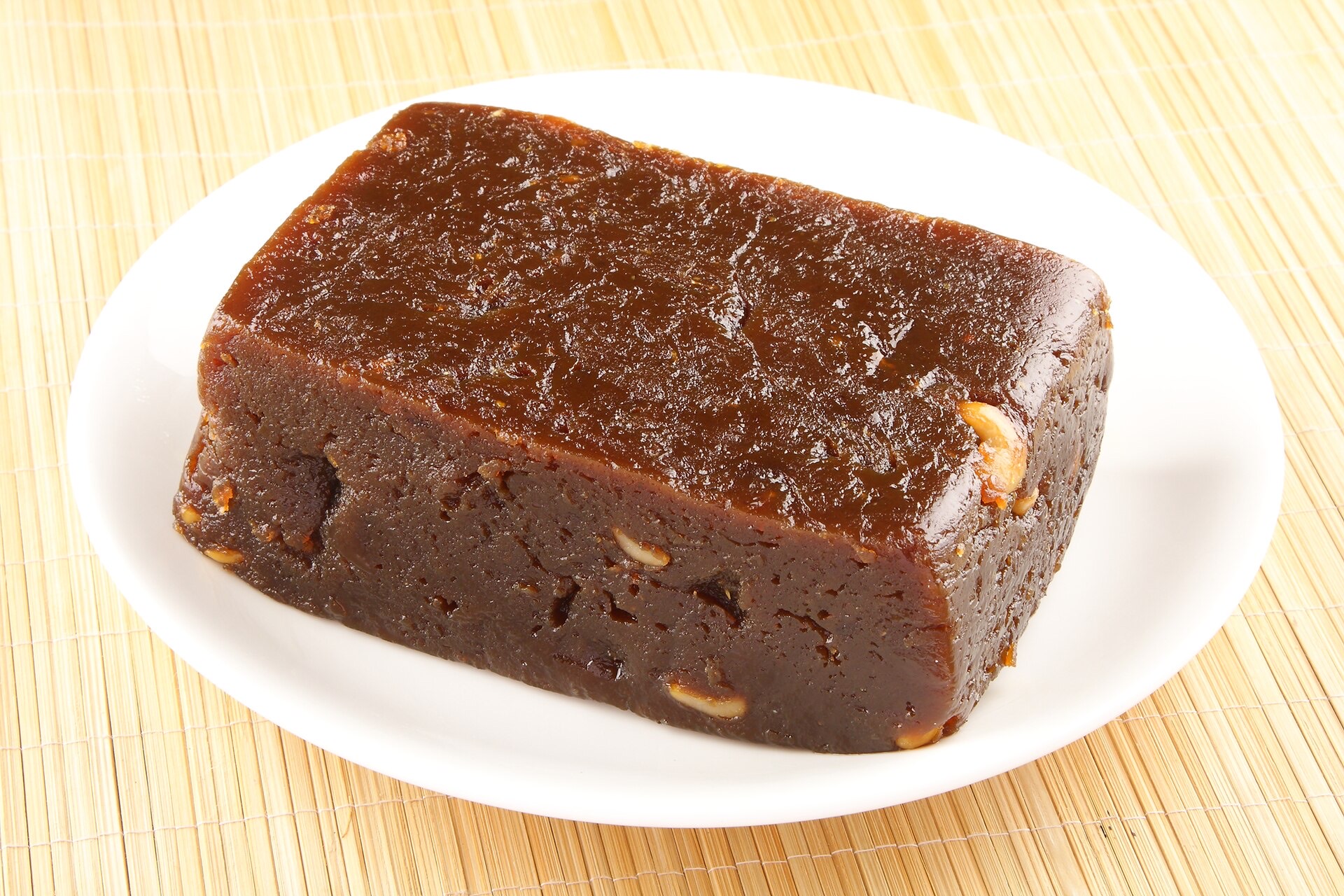
The comparison table
| Kozhikodan (Calicut) | Karachi (Bombay) | Tirunelveli | |
|---|---|---|---|
| Base | Wheat starch (settled from maida) | Corn flour | Wheat milk (soaked, wet-ground wheat) |
| Fat | Coconut oil | Ghee | Ghee, generously |
| Texture | Dense, glossy, elastic chew | Springy, jelly-translucent | Soft, flowing, spoonable |
| Served | Slab, cut in cubes | Cut pieces, often with nuts | Warm, by the ladle |
| Signature version | Black (karutha) jaggery halwa | Orange/red with cashew | The single classic, sugar + ghee |
| Home | SM Street, Kozhikode | Sindh → Bombay | Tirunelveli, Tamil Nadu |
| Keeps | 2-3 weeks airtight | Days to a couple of weeks | Best fresh and warm |
Three origin stories
Kozhikodan - Arab traders brought the halwa idea to the Malabar spice port (the word is from Arabic hulw, “sweet”), and Calicut’s cooks rebuilt it around coconut oil and wheat starch. The sweet named the city’s main market street - the full story is in SM Street: Mittayi Theruvu.
Karachi - the corn-flour halwa of Sindh took Karachi’s name before Partition; after 1947, migrating halwais established it in Bombay, where it picked up its second name (Wikipedia: Karachi halwa). Its glassy, springy bite comes from corn starch gelatinising in ghee and sugar.
Tirunelveli - the Tamil temple town’s halwa tradition dates to the 1880s, with cooks of Rajasthani origin credited for the technique. Wheat is soaked overnight and wet-ground; the starchy extracted “milk” cooks with sugar and ghee into a halwa served soft and warm. The best-known shop, Iruttu Kadai - “the dark shop”, famously unelectrified in legend and unexpanded in fact - has sold it since 1900 (Wikipedia: Iruttu Kadai).
The coconut-oil difference, tasted
Put a cube of Kozhikodan beside the other two and the fat announces itself first: coconut oil reads clean and faintly tropical where ghee reads warm and dairy-round. The starch does the rest - wheat starch sets denser and chewier than corn flour’s bounce, and worlds apart from wheat milk’s soft ladle. None of the three is “better”; they are answers to different questions. But for shipping across India, the Calicut answer wins - the dense slab travels for weeks where Tirunelveli’s warm softness cannot.
Go deeper: the full Kozhikodan guide, every Calicut variety decoded, the glossary entry, or make it yourself with the coconut-oil method recipe.
Keep reading & shopping
Frequently asked
What is the main difference between Calicut, Karachi and Tirunelveli halwa?
The base and the fat. Kozhikodan (Calicut) halwa is wheat starch cooked in coconut oil - glossy, elastic, chewy. Karachi (Bombay) halwa is corn flour in ghee - translucent, springy, jelly-like. Tirunelveli halwa is 'wheat milk' extracted from soaked ground wheat, cooked in ghee - soft, ladle-served, eaten warm.Why is it called Karachi halwa if it is made in Bombay?
The corn-flour halwa tradition comes from Sindh, and the name attached to Karachi before Partition. Sweet makers who migrated to Bombay after 1947 brought it with them, and it became equally known as Bombay halwa.What is special about Tirunelveli halwa?
The wheat-milk method: wheat is soaked overnight and wet-ground, and the extracted starchy 'milk' is cooked with sugar and generous ghee. The most famous maker, Iruttu Kadai ('the dark shop'), has operated in Tirunelveli since 1900; the town's halwa trade dates to the 1880s.Which of the three halwas keeps longest?
Kozhikodan halwa - its dense, low-moisture slab format keeps two to three weeks airtight at room temperature, which is why it ships so well. Tirunelveli halwa is at its best warm and fresh; Karachi halwa sits in between.Which halwa should I try first?
Whichever tradition you are closest to - but if buying online from anywhere in India, Kozhikodan travels best. Start with the black (karutha) variety and go from there.