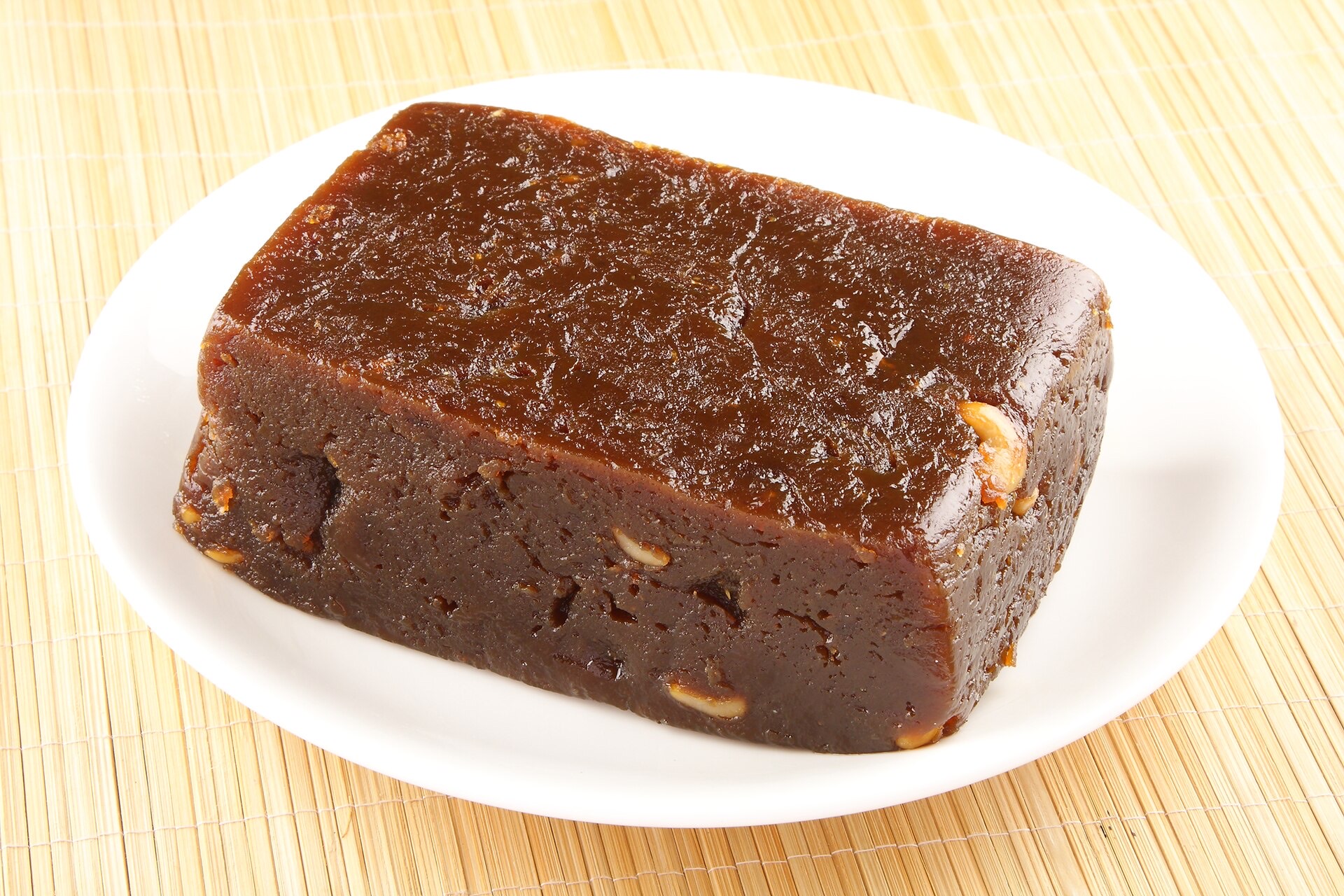
The varieties, decoded
| Variety | What makes it | Character |
|---|---|---|
| Black / karutha | Dark jaggery, extra-long cooking | The original; deep caramel, least sweet-tasting, most prestige |
| Red | Sugar base, food colour | The shop-window icon; clean sweet chew |
| Banana | Nendran banana worked into the base | Fruity, aromatic, the most popular fruit halwa |
| Ghee / ney | Finished richer with ghee | Softer, rounder; closer to north-Indian halwas |
| Tender coconut | Young coconut flesh | Delicate, milky, modern favourite |
| Wheat (gothambu) | Whole-wheat leaning base | Rustic, jaggery-friendly |
| Dry fruit / cashew / pista | Nut-loaded premium versions | Densest and priciest |
| Exotics (pineapple, mango, chilli…) | Seasonal fruit or novelty | For the adventurous second box |
The engine under all of them is identical and is what makes halwa Kozhikodan: maida rested in water until the starch settles, that starch cooked with the sweetener in coconut oil - not ghee - and stirred until glossy and elastic. The full process is in the Kozhikodan halwa guide and our home recipe.
Why black halwa is the benchmark
Karutha halwa hides nothing. There is no colour to charm you and no nuts to distract - just jaggery, starch, oil and time. Undercook it and it slackens; rush the jaggery and it turns bitter. Which is why Calicut buyers taste a shop’s black halwa first and judge everything else by it. Its darkness is earned, not dyed - long cooking takes the jaggery deep toward caramel-black.
What it costs (observed July 2026)
From a survey of Calicut’s online halwa sellers in July 2026: classic flavours around Rs 160-280 for roughly 900 g slabs; premium dry-fruit and exotic varieties Rs 899-999; assorted boxes of 12-24 varieties about Rs 899-1,599. On SM Street itself, slab halwa by weight runs cheaper - part of the pleasure of buying it where it was invented. Prices move with jaggery, nuts and season; treat these as the July 2026 snapshot.
Buying it well
- Judge by the black. If a seller’s karutha halwa is good, trust the rest of the menu.
- Check the base fat - coconut oil is the Kozhikodan signature; “vanaspati” is a cost cut you can taste.
- Ask about colour in the vivid varieties; honest shops answer plainly.
- Shelf life is real but finite - two to three weeks airtight; the halwa guide covers storage.
Context worth reading: what the sweet did for its street, the glossary entry, and how it compares with India’s other famous halwas in Calicut vs Karachi vs Tirunelveli halwa.
Keep reading & shopping
Frequently asked
What is black halwa (karutha halwa)?
The original and most respected Kozhikodan variety - wheat starch cooked slowly with dark jaggery and coconut oil until nearly black, dense and glossy. Its colour comes from the jaggery and long, patient cooking, not dye. Connoisseurs judge a halwa shop by its black halwa first.How many varieties of Kozhikodan halwa are there?
Calicut shops routinely offer dozens - one prominent online seller lists 50+ flavours, another curates boxes of 12 and 24 varieties (observed July 2026). They all build on the same wheat-starch and coconut-oil base with different sweeteners, fruits and nuts.Which Kozhikodan halwa variety should a first-timer buy?
Black (karutha) halwa for the true classic, banana halwa for the most loved fruit version, and one bright variety like red or pineapple for the experience. Assorted boxes exist for exactly this reason.What does Kozhikodan halwa cost?
As observed in July 2026 across Calicut online sellers: roughly Rs 160-280 for classic flavours around 900 g, up to Rs 899-999 for premium dry-fruit and exotic varieties, and about Rs 899-1,599 for assorted boxes. Street prices on SM Street run lower by weight.Is the colour in red and green halwa natural?
Not usually - classic black gets its colour from jaggery, and fruit varieties take tint from the fruit, but the vivid reds and greens in shop windows typically use permitted food colouring. Honest sellers say so; ask if the listing doesn't.